Travel log

coucher du soleil

Archive for December 2025

pizzaza-660x400

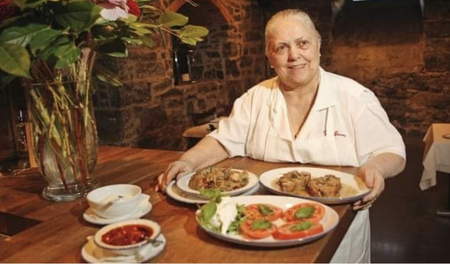
Trendy locals appreciate their impressive wine list and often drop by for a drink after work, or to dine on one of their many gourmet pizzas. Originality and flavour are on the menu here. Piz’za-za has an urban decor, with brick, wood and mirrors, centering on their impressive bar and open view of the kitchen. It’s on the second floor that we find the pièce de résistance, their large glass wine cellar that would make any oenophile drool. During the summer months, you’ll want to check out their lovely back patio.

MG_9938-600x286

The restaurant staff is remarkably friendly and quick, creating a welcoming and inviting atmosphere. Employees receive regular courses on the wines offered in the restaurant to improve their service. The menu has many charms, for example, their tomato gratin with brie and raclette cheese made with Griffon beer. Bold, simple, and exquisite. The pizzas are delicious and made with fresh ingredients like fennel, fig, mango and smoked trout, and their salads and pastas are colourful and fresh. Every season, the chef makes up a new menu inspired by seasonal local ingredients.

The restaurant also offers wine tastings hosted by oenologist Richard Charbonneau. With varying themes, these workshops are a fantastic way to discover the diversity of wines while savouring a succulent meal.

Piz’za-za is definitely worth the detour. Thanks to its proximity to Canada`s capital, it is common for locals and tourists to cross the river for some good food, good wine, all at a reasonable price. To view their menu or find out about their wine tastings, visit their website at www.pizzaza.ca

Piz’za-za Restau Bar à vin 36, rue Laval Gatineau, Québec [email protected] www.pizzaza.ca

Vieux-Québec and Vieux-Port

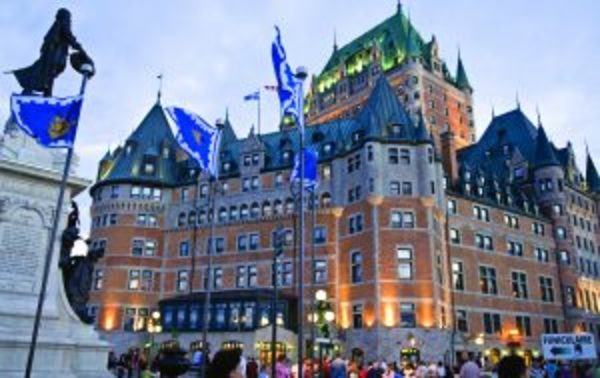
QuebecChateauFrontenacchamplain

Walking in the streets of Vieux-Québec is like following in the steps of the pioneers who gave birth to this nation. Founded by Samuel de Champlain as a trading post in 1608, the colony first developed around l’Habitation de Québec before expanding into the first streets traced around the Place Royale in the heart of the Vieux-Port. Restored in the early 1970s, this historical district brings us back in time to the capital of Nouvelle-France (New France) at the end of the 17th century. This was the era of Louis XIV, a bust of whom adorns the area. As I myself am a descendant of Mathurin Gagnon, who was one of the first merchants of Québec and whose home and retail store were located at the current site of the Sault-au-Matelot park (or Parc de l’Unesco), walking on the cobblestones of these historic sites is like reconnecting with the history of our roots in this country. A few steps away, Place Royale is the main site of the annual Fêtes de la Nouvelle-France, recreating the French colonial era of its original inhabitants.

In the Vieux-Port, one must absolutely visit the Musée de la Civilisation. The neighborhood is home to many gay-friendly establishments, among them the restaurant Marie-Clarisse, which was opened at the foot of the Casse-Cou staircase by nenowned chef Serge Bruyère.

Heading up to Haute-ville, one can admire the elements of fortification which have made Québec unique, for it is the only still-fortified city in North America. It is the neighborhood commonly reffered to as Vieux-Québec. Built at the end of the 19th century near the Citadelle fort, the hotel Château Frontenac rises above Place Royal on one side of the Terrasse Dufferin. The latter is a splendid walkway offering a spectacular view of the area and is perfect for romantic strolls. One can easily understand why the founders of Québec chose this strategic spot to establish the colony, which would become the capital of New France, then Lower Canada and finally, Québec.

The gay lifestyle took root fairly early in Vieux-Québec. The Sauna-hôtel Hippocampe on Mac Mahon Street, the oldest gay establishment still operating in the province (where some might recognize the interiors used for Robert Lepage’s film Le Confessionnal), has been open for over four decades. The owner, Yvon Pépin, had previously tended bar in many Vieux-Québec clubs, in a time when homosexual life was still mostly underground.

André Gagnon

le-saint-amour

Old Québec is the most popular tourist destination in Québec and features many of the greatest restaurants in the city. In the tradition of Serge Bruyère, many fine chefs in Québec are found in Québec city. Let us mention Jean-Luc Boulay (Le Saint-Amour and Chez Boulay), Arnaud Marchand (Chez Boulay), Daniel Vézina (Laurie Raphaël) and Louis Pacquelin (Panache) among others. Jean-Luc Boulay and Arnaud Marchand from Chez Boulay offer the experience of northern French cuisine while highlighting typical local products. It is located on the ground floor of the elegant Manoir Victoria, on Saint-Jean Street. Close by, Mr. Boulay also presides over the kitchen activities at Saint-Amour, a prominent figure of Québec’s gastronomic scene. Moreover, Saint Amour appears in Trip Advisors’ top 10 fine dining restaurants and it is not unusual to spot a celebrity seated there.

Situated in an old 18th century warehouse in Vieux-Québec and part of the Auberge Saint-Antoine, the restaurant Panache offers the refined menu of chef Louis Pacquelin. While there, you can discover the artefacts showcased on the walls of the building, recalling the rich history of the French colony.

Tourists will also appreciate Les Anciens Canadiens, a restaurant established in a heritage building, where you can discover or rediscover some of the classics of traditional Québec cuisine. Near Château Frontenac, the Continental is renowned for its flambés. Close by, Le Parmesan offers delicious classics of Italian cuisine

Sillery, Sainte-Foy and Cap-Rouge

Villa_Bagatelle

Sillery, Sainte-Foy and Cap-Rouge have the reputation of being the more affluent neighborhoods of the capital. This area is home of the main campus of Université Laval, the oldest francophone higher education establishment in America, where the first LGTBQ organization in the capital, the Groupe gai de l’Université Laval, first appeared.

Whether arriving in Québec from the south shore using the highway or the Chemin du Roy, or coming in from the international airport, one inevitably crosses this district before accessing downtown Québec. There are also many hotels in the vicinity of the bridges, especially along Laurier Boulevard. This might be the more practical choices for those coming into the city by car, as the old narrow streets of Old Québec where obviously conceived for horse-drawn carriages and pedestrians, not cars. Shoppers will appreciate the proximity of the shopping malls also found on Laurier Boulevard.

Coming over the bridges from this district, you should visit the Promenade Samuel –De-Champlain park along the river, which was inaugurated in 2008 for the 400th anniversary of the city. Whether arriving by foot, bike or car, the promenade offers a spectacular view of the city and leads right into historic Old Québec. This is a great way to connect with a natural environment in the heart of the city.

Sillery is certainly the most affluent neighborhood of the capital. Its trendiest street, Maguire Avenue, is an area especially appreciated by our community, offering quaint boutiques, with good restaurants and nice terraces. It also features one of the most remarkable parks in the city, Spencer Wood, which became a showcase for horticulture in North America through the efforts of its owner, Henry Atkinson. For nearly 20 years, the governor-generals of United Canada lived on the property, which was purchased by the Québec government in 1870 and served as the residence of Québec lieutenant-governors until 1966. A major fire eventually destroyed the main residence. Visit the gorgeous park by the Saint Lawrence River, the beautiful gardens and relics of the site's long history.

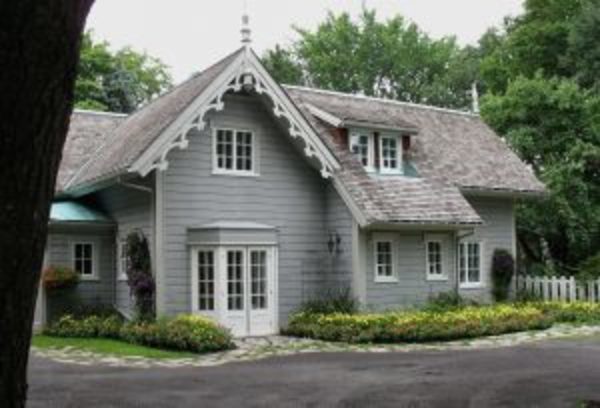
Villa Bagatelle, with its distinctive irregular forms and ornamentations, was built in the picturesque English architectural style of the 19th century. The cultural centre hosts temporary art and history exhibitions. The Villa is also renowned for its garden where you can admire many native plants and a range of underbrush species.

Also noteworthy is the Aquarium du Québec, with its gardens and outdoor tanks, and a main building featuring many exhibition spaces. The venue includes nearly 10 000 specimens representing 300 species of mammals, indigenous and exotic fish, invertebrates, amphibians and reptiles. Watch marine mammals, such as polar bears, walruses and several seal species, frolic in the outdoor park. Many animals from the Pacific Ocean swim in our huge 350 000-litre tank. The area overlooks the Saint Lawrence River from atop a cliff, an excellent way of discovering these faraway regions.

Since 2014, Pride has been a growing event. in Pembroke. Pride Walk began when a group of friends decided that the city—and the Ottawa Valley area in general—needed more LGBTQ+ awareness and representation. So, they organized their first Pride event in 2014, a walk through downtown Pembroke with almost 150 attendees. In the past five years, their work has expanded beyond events—organizers recently partnered with PFLAG Renfrew County to bring support meetings to the Ottawa Valley. And events go well beyond the OG walk; last year’s schedule included an inclusive yoga class, Drag Queen Storytime at Pembroke’s public library, an all-ages drag show and, of course, brunch, an overall attendance of a thousand people.

Usually taking place early June, the 2020 schedule is still to be confirmed due to the current coronavirus pandemic.

You can’t talk about Mile End gastronomy without talking about Montréal’s Jewish and Eastern European heritage. It is the centre of the emblematic institutions of this legacy in the city, where immigrant Jews, most of them from Eastern Europe, brought us the bagel, the smoked meat sandwich and cured sausages in the early 20th century. In Mile End you’ll find the two temples of bagels that are Fairmount Bagel and Saint-Viateur Bagel. The story goes that the Montréal bagel is sweeter and more delicate than its New York cousin, a probable result of adapting to local taste. Try out a sausage sandwich at Wilensky’s on Fairmount Street. Smoked meat fans will definitely want to wait in line to try Montréal’s famous smoked meat sandwiches at the restaurant Schwartz on St-Laurent, just south of the Mile End.

B & M brunch
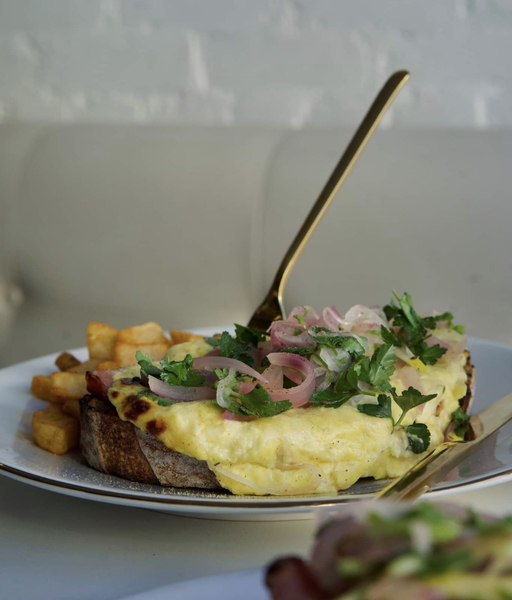
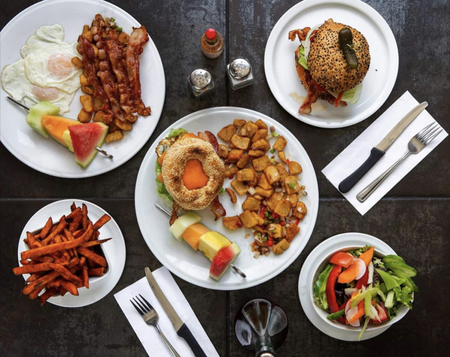
The specialties of bagels and sandwiches associated with the Mile End neighbourhood are most probably linked to its being a favoured brunching destination. This tradition has been well established by the restaurant Beauty’s on Mont-Royal Avenue, where bagels are a specialty. Restaurants such as B & M or Fabergé, located on St-Viateur and Fairmount respectively, offer their own updated version of the Mile End brunch. The Syrian restaurant Kazamaza on Parc Avenue even proposes a Middle Eastern version of it.

The multiethnic character of the neighbourhood is, of course, also reflected in the more refined eateries of the area, with some fine cuisine from all sides of the Mediterranean basin. In the intimate décor of bistro Barcola on Parc Avenue, you will discover authentic Northern Italian cuisine. At the limits of Outremont on the corner of Van Horne and Hutchison, the Caffé Della Pace prepares a variety of Italian coffees and offers healthy, homemade vegetarian dishes composed of fresh ingredients. The prices are very reasonable and the atmosphere is friendly, with a piano in one corner and sofas in another. Both families with children and queers rub shoulders here. The fancy bistro Chez Lévêque on Laurier West has remained a very popular spot for the past 45 years. There is a humorous, slightly irreverent tone here, and a religious theme is displayed in reference to the patronymic of chef and co-owner Pierre Lévêque (L’évêque meaning Bishop). This chic Parisian brasserie with a distinctive Montréal touch has never deviated from the concept that made its success: good food and wine, in a trendy but casual ambiance. Their “faim de soirée” menu becomes available after 9pm, with more affordable prices attracting a younger clientele.

Of course, this neighbourhood’s culinary spectrum is much larger than what we can possibly cram into this page, and Local Montréal Tours can design customized gourmet tours that allow for rich and diverse Mile End discoveries.

In the estuary of the Restigouche River, at the end of Chaleur Bay, lies the national historic site of the Battle of the Restigouche, 3 km west of the municipality of Pointe-à-la-Croix. This historic site commemorates the last naval battle of the Seven Years' War between the French and English for possession of New France…

But it was also near this site, to the east of Pointe-à-la-Croix, that over a thousand Acadians fleeing deportation took refuge, in what was called in 1758 the village of Petite-Rochelle. At the time of the fall of Quebec in September 1759, the village was only defended by a fortified post and a handful of soldiers. Under the English threat, this Acadian refuge was nevertheless the last French bastion to capitulate. Here's why…

The last naval battle

At the end of May 1760, the Petite-Rochelle post received unexpected aid. The winter had been harsh, and the population had suffered greatly from famine. A French flotilla commanded by Lieutenant François Chenard de La Giraudais took refuge at the end of Chaleur Bay. Comprising the frigate Le Machault and two supply ships loaded to aid Canada, they had preferred to avoid encountering a larger English fleet that preceded them at the entrance of the Saint Lawrence River. On June 27, the three French ships were trapped by an English fleet of five warships commanded by Captain John Byron, who engaged in battle. The defense of the Petite-Rochelle post, however, was organized and supported by Acadian militiamen and Mi'kmaq warriors. François-Gabriel d’Anjeac, captain of the troops aboard the French ships, had taken command of the post and directed the construction of a battery and a guard post at Pointe-à-la-Garde (east of Pointe-à-la-Croix). This battery caused real damage to the English and delayed their progression towards the French ships. But the fight was uneven…

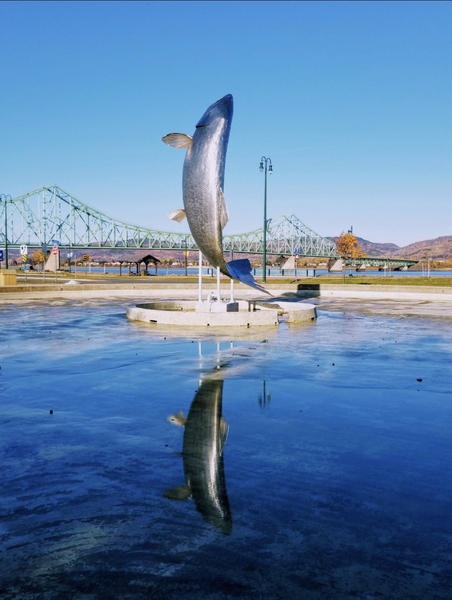
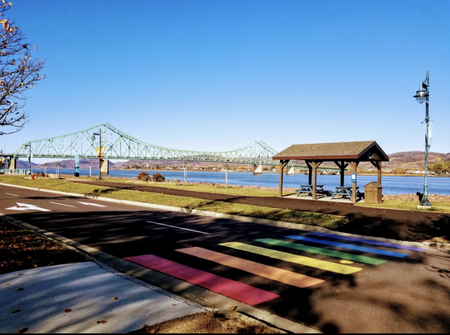
Estuary of the Restigouche River and Van Horne Bridge
Estuary of the Restigouche River and Van Horne Bridge connecting Campbellton to Pointe-à-la-Croix, viewed from Sugarloaf Mountain, New Brunswick. It is here that remains of the Machault still lie at the bottom of the river (author Blob5825, unmodified, license CC BY 1.0)
On July 8, at the end of a fierce battle, La Giraudais scuttled his ships to prevent the English from seizing the supplies and weapons. Quickly, Captain d’Anjeac led the retreat of his troops into the woods. However, the English fleet preferred to withdraw. Thus ended the battle of the Restigouche. The English had burned all the houses they found on the shore. The disaster was total. D’Anjeac still managed to organize the resistance of the Petite-Rochelle post, which still sheltered a thousand Acadian refugees. It was in vain… The French troops had to lay down their arms on October 30, after the capitulation of Montreal. The Acadians were left in place, plunged into great uncertainty, which did not prevent the Acadian privateers from continuing a relentless privateering war against the English boats. Several families had still managed to flee along Chaleur Bay and had founded the village of... Bonaventure.

RSS Feed

Subscribe

Categories

Tags

Latest Posts

Archives